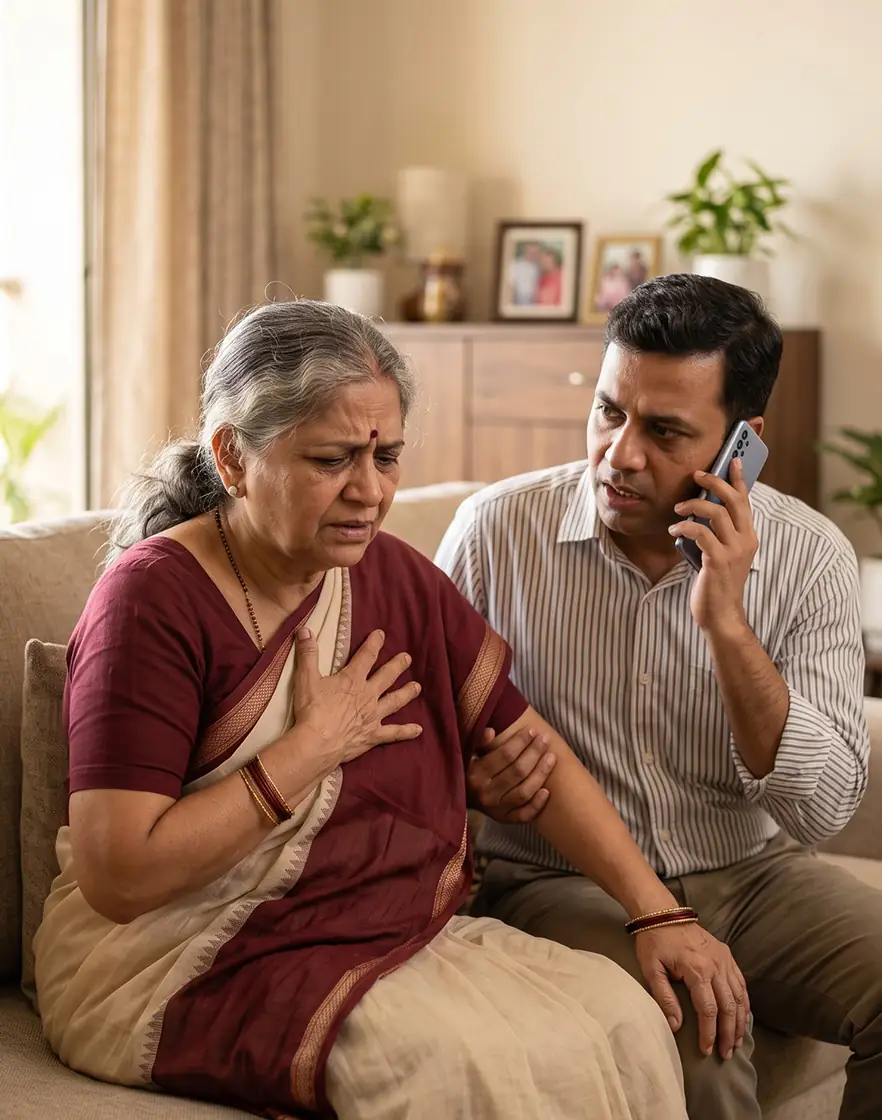
A heart attack can progress quickly, and the first priority is to identify the problem and restore blood flow when required. Symptoms may be obvious, but they can also begin as pressure, breathlessness, sweating, unusual weakness or discomfort that does not feel like classic chest pain.
At Sudarshan Heart Clinic, Dr Gaurav Mohan provides specialist cardiac evaluation and treatment planning for acute coronary emergencies, including heart attacks that may require urgent angiography, primary angioplasty and stenting.
When Urgent Cardiac Attention May Be Needed
Seek immediate medical attention for symptoms such as:
- Sudden or persistent chest pain or pressure
- Pain spreading to the arm, shoulder, jaw or back
- New or severe breathlessness
- Cold sweating, nausea or unexplained weakness
- Sudden dizziness or fainting
- Chest discomfort with known heart disease or major cardiac risk factors
These symptoms should not be self-diagnosed or delayed while waiting for them to settle.
From Emergency Evaluation to Intervention
The initial assessment may include an ECG, blood investigations, clinical examination and other cardiac tests to determine whether a heart attack is occurring and how urgently the coronary arteries need to be evaluated.
When an acute coronary blockage requires intervention:
- Emergency Coronary Angiography identifies the artery responsible for reduced blood flow.
- Primary Angioplasty opens the blocked or critically narrowed coronary artery.
- Coronary Stenting may be performed to help maintain blood flow after the artery has been opened.
- Management of Cardiac Complications may be required when a heart attack affects heart rhythm, pumping function or overall cardiovascular stability.
The treatment strategy depends on the type of heart attack, coronary anatomy, severity of the blockage and the patient’s overall condition.
Care Continues After the Emergency
Successful emergency treatment is only the first stage. Follow-up may involve medication management, assessment of heart function, blood pressure and cholesterol control, diabetes management, cardiac risk reduction and monitoring for recurrent symptoms.
Under the care of Dr Gaurav Mohan, who is among the top heart specialist doctor in Amritsar, the focus is on moving quickly from diagnosis to the appropriate intervention while planning the next phase of recovery and long-term heart care.
Frequently Asked Questions
What are the warning signs of a heart attack?
Common warning signs include chest pressure or pain, breathlessness, sweating, nausea, sudden weakness, dizziness or discomfort spreading to the arm, jaw, shoulder or back.
Does every heart attack require angioplasty?
No. Treatment depends on the type of heart attack, ECG and test findings, coronary anatomy and the patient’s clinical condition.
What is primary angioplasty?
Primary angioplasty is an emergency catheter-based procedure used to open a coronary artery that has become critically narrowed or blocked during certain heart attacks.
Why is coronary angiography done during a heart attack?
Angiography helps identify which coronary artery is blocked, where the blockage is located and whether immediate intervention is required.
What happens after angioplasty for a heart attack?
Follow-up typically includes medication review, assessment of heart function, management of cardiac risk factors and continued monitoring as part of long-term recovery.